

About COMPASS
The 2023 COMPASS Theme is Megatrends in Test and Measurement
FormFactor’s COMPASS test and measurement community event brings together FormFactor customers from around the
world to discuss the products and technologies shaping our future. Industry leaders and speakers from corporations,
leading-edge research institutions and FormFactor share test insights on a wide variety of emerging applications
including 5G, trends in advanced packages, next generation memories and other devices, ultra-low noise testing,
cryogenic probing and millimeter-wave measurement and calibration.
Thank You COMPASS 2023 Participants!

Agenda

Mike Slessor
President & CEO

Brandon Boiko
Sr. Applications Engineer

David Cooke
Product Marketing Manager

Pratik Ghate
Principal RF Engineer

Jack De Grave
Director, Business Development

Hadi Najar
Sr Principal Engineer Mechanical Design

Simon Reissmann
Sr. Applications Engineer
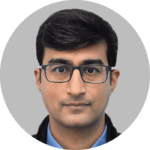
Pranav Shrivastava
Principal Applications Engineer

Dr. Choon Beng Sia
Test Technologist


Mike Slessor
President & CEO, FormFactor, Inc.
Michael D. Slessor has served as our Chief Executive Officer of FormFactor, Inc. since December 2014, and as a Director since October 2013. Mike served as President from October 2013 to December 27, 2014, and as Senior Vice President and General Manager, MicroProbe Product Group from October 2012 to October 2013. Before joining FormFactor, he was President and Chief Executive Officer of MicroProbe from July 2008 through the October 2012 closing of FormFactor’s acquisition of MicroProbe. Prior to joining MicroProbe, he held various management, product-marketing, and applications-engineering positions in the semiconductor industry, primarily with KLA.
Mike received his Ph.D. in Aeronautics and Physics from the California Institute of Technology and his B.A.Sc. in Engineering Physics from the University of British Columbia.

Brandon Boiko
Sr. Applications Engineer, FormFactor, Inc.
Brandon is a senior applications engineer with FormFactor Inc. as part of the cryogenics HPD product group. He attended the University of Colorado in Boulder where he earned both his bachelor’s and master’s degree in mechanical engineering. Starting his cryogenics career in 2015 at High Precision Devices, Brandon has more than 8 years of experience designing low temperature equipment. In Fall of 2021 FormFactor initiated the Advanced Cryogenics Lab where he is currently leading the development of cryogenic test as a service.
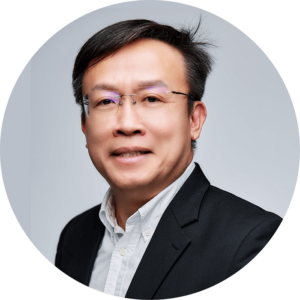
Dr. Choon Beng Sia
Test Technologist, FormFactor, Inc.
Dr Choon Beng Sia is a SSG Fellow, conferred by the President of the Republic of Singapore. He is also a Nanyang Research Scholar and has received doctorate degree in Electronics Engineering from Nanyang Technological University, Singapore. At MIT, Dr Sia studied data science and big data analytics.
In his current work at FormFactor as a Test Technologist in the Center of Expertise, Dr Sia develops and commercializes solutions to overcome emerging semiconductor wafer test and measurement challenges. His research interests include design, test and modelling of silicon-based RF devices, THz calibration and measurements for beyond 5G and IoT applications, photonics and power device wafer tests for LIDAR/Autonomous Transport/Optical communication applications as well as applying data analytics, deep learning and artificial intelligence to wafer tests and device modelling.
Dr Sia also serves in the IEEE MTT-3 technical committee that develops standards and best practices for RF measurements and he is also the MTT-3 speaker bureau specialising in wafer RF and 5G tests. Through SPRING, the Singapore National Standards board, Dr Sia represents Singapore as a Technical Expert in various IEC technical committees, developing standards for MEMs, optical and wafer-level reliability tests for semiconductor devices.
Dr Sia is a frequent invited speaker and organizer of IEEE workshops, international test forums and presently holds 12 international patents. Dr Sia has published more than 50 scientific journals and conference publications. His technical papers on RF, 5G production wafer tests and Silicon Photonics tests received multiple "Best Paper" awards at international wafer test conferences.
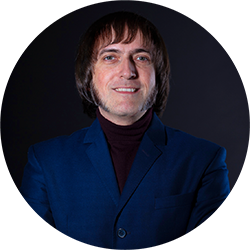
Bastian Tröger
Team leader of Product Management and Field Application, FRT Metrology / FormFactor, Inc.
As a graduate engineer specializing in physical optics, Bastian Troeger can look back on many years of professional experience in the area of optical metrology. His career at FRT started in 2007 in the development department, followed by the establishment of a new product management department and eventually led him to the management level of FormFactor FRT Metrology.
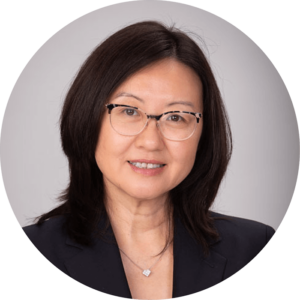
Amy Leong
SVP, Chief Commercial Officer, FormFactor, Inc.
Amy Leong has served as Senior VP, Chief Commercial Officer since January 2023, responsible for global customer sales and services, corporate marketing and M&A. From 2012 to 2022, she has held various management positions with FormFactor including Chief Marketing Officer and General Manager. Prior to FormFactor, Amy was VP of Marketing at MicroProbe from 2010 through the October 2012 closing of FormFactor’s acquisition of MicroProbe. Before joining MicroProbe, Amy worked at Gartner, Inc. as a Research Director from 2008 to 2010 and covered the foundry & logic market and various emerging applications. From 2003 to 2008, Amy worked at FormFactor where she served as Senior Director of Corporate Strategic Marketing and Director of DRAM Product Marketing. Prior to FormFactor, she worked in a variety of semiconductor process engineering, metrology, and product marketing roles at KLA and IBM. Amy currently serves as an independent board of director at Skywater Technology (NASDAQ: SKYT), the only US-investor owned pure-play semiconductor and technology foundry.
Amy holds an M.S. in Material Science and Engineering from Stanford University and a B.S. in Chemical Engineering from the University of California, Berkeley.
Bastian Tröger
Team leader of Product Management and Field Application, FRT Metrology / FormFactor, Inc.
As a graduate engineer specializing in physical optics, Bastian Troeger can look back on many years of professional experience in the area of optical metrology. His career at FRT started in 2007 in the development department, followed by the establishment of a new product management department and eventually led him to the management level of FormFactor FRT Metrology.

David Cooke
Sr. Product Marketing Manager, FormFactor, Inc.
David Cooke has a distinguished career in the semiconductor test and measurement community and with FormFactor. He has held positions in business development, account management and product marketing.
He has a masters of engineering from University of Massachusetts Lowell.

Simon Reissmann
Sr. Principal Applications Engineer, FormFactor, Inc.
Simon Reissmann holds a Bachelor and Masters degree in electrical engineering. He has industry experience in optical transceiver test and UV LED system from his previous employers Tektronix and Phoseon Technology. He currently supports silicon photonics customer outreach, testing and development for the FormFactor system business unit as Principal Applications Engineer in the Center of Expertise (COE).

Pratik Ghate
Principal RF Engineer, FormFactor, Inc.
Pratik Ghate received the B.E. (2014) in electronics engineering from Nagpur University, India, M.S. (2015) in electrical engineering from The University of Texas at El Paso, and Ph.D. (2021) in electrical engineering from The University of Texas at Arlington. His research interests include high frequency electromagnetics, RF design and measurements, antenna design and computational electromagnetics. Dr. Ghate joined FormFactor, Inc. in June 2021 where he is working as a Principal RF Engineer.
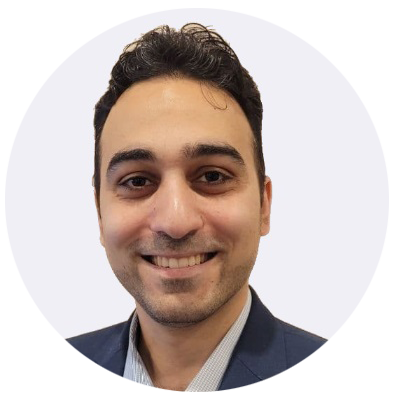
Hadi Najar
Sr Principal Engineer Mechanical Design, FormFactor, Inc.
Hadi Najar is currently Sr. Principal Engineer Mechanical Designer at FormFactor, Inc., Livermore, CA. He received his B.A.Sc. and M.A.Sc. degrees in electrical and computer engineering from the University of British Columbia, Vancouver, BC, Canada, in 2008 and 2010, respectively. He received his Ph.D. degree in electrical and mechanical engineering from the University of California at Davis (UC Davis), in 2014. His Ph.D. work and Post Doctoral Research focused on design and analysis of diamond-based MEMS resonators and hemispherical resonating gyroscopes. He was a Design Engineer with Texas Instruments, Inc., Santa Clara, CA in 2015. Dr. Najar has been the Chair of IEEE MEMS San Francisco-Bay Area chapter since 2016.

Jack De Grave
Director of Business Development, HPD / FormFactor, Inc.
Jack DeGrave joined the FormFactor-HPD Business Development team in early 2021 where he has focused on engaging with the Quantum Development Community members to map out the needs for cryogenic test and measurement, high density I/O device interfacing, and cryostats for deployment of quantum processors. His background in cryogenic test and measurement dates to early 2010 during his PhD studies in low temperature transport properties of helimagnets and skyrmions at the University of Wisconsin-Madison. After graduating, he held business development positions at several cryogenics companies. Jack brings greater than a decade of experience in cryogenic system design and test & measurement.

Dr. Deepak Kulkarni
FELLOW, ADVANCED PACKAGING, AMD
Keynote Presentation - Advanced Packaging: Enabling Moore’s Law’s Next Frontier
Chiplet architectures are fundamental to the continued economic viable growth of power efficient computing. Thus, the criticality of advanced packaging technologies and architectures correlated to Moore’s Law’s next frontier is high. New heterogeneous architectures, along with AMD’s industry leading advanced packaging roadmap, enable power, performance, area, and cost (PPAC). PPAC considerations per product influence the choice of Substrate (2D), Fanout based (2.5D) and Hybrid Bonded (3D) technologies and will be addressed in this keynote. Finally, AMD’s High Performance Fanout previewed in the RDNA3 architecture along with enabling technologies like power delivery and thermal improvements will be detailed.
Deepak Kulkarni is a Fellow, Advanced Packaging at AMD. Deepak has over 15 years of experience in packaging technology development. Over the years, he has held several leadership positions driving substrate technology development and yield improvement. Prior to joining AMD, Deepak was Senior Director of packaging yield at Intel Corporation. He holds eight patents and nineteen publications on various aspects of packaging such as 2.5D/3D architectures, DFM/DFY and AI techniques applied to yield management. His contributions to the semiconductor industry have been recognized by an Intel Achievement Award, Next 5% award (AMD) and best paper award (ITHERM). Deepak holds a PhD from the University of Illinois Urbana-Champaign with a major in mechanical engineering and a minor in computational science.
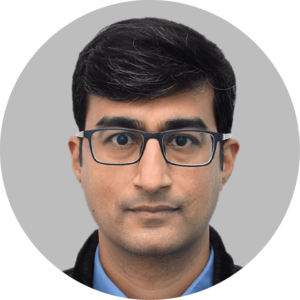
Pranav Shrivastava,
Principal Applications Engineer, FormFactor, Inc.
Pranav Kumar Shrivastava joined FormFactor GmbH Germany this year as a team member of CoE team at FFI. He done his B.Tech degree in Electronics and Communication Engineering from INDIA. Also completed M. Tech degree with the specialization in RF and Microwave Engineering from Indian Institute of Technology, Kharagpur, INDIA in 2014 and Ph.D. from Centre for Applied Research in Electronics, IIT Delhi, INDIA in 2022. His main research interests during his Ph.D. work involved RF micromachined components in mmWave range, phases shifters, RF MEMS switch, Sub-THz range metastructure and their characterization.
Presentation Video Request
Stay Informed
If you’d like to be informed when registration opens, please fill out this form. Your information will not be shared.
Questions or need help?